The Iran Threat Is Stronger With Congress Behind It
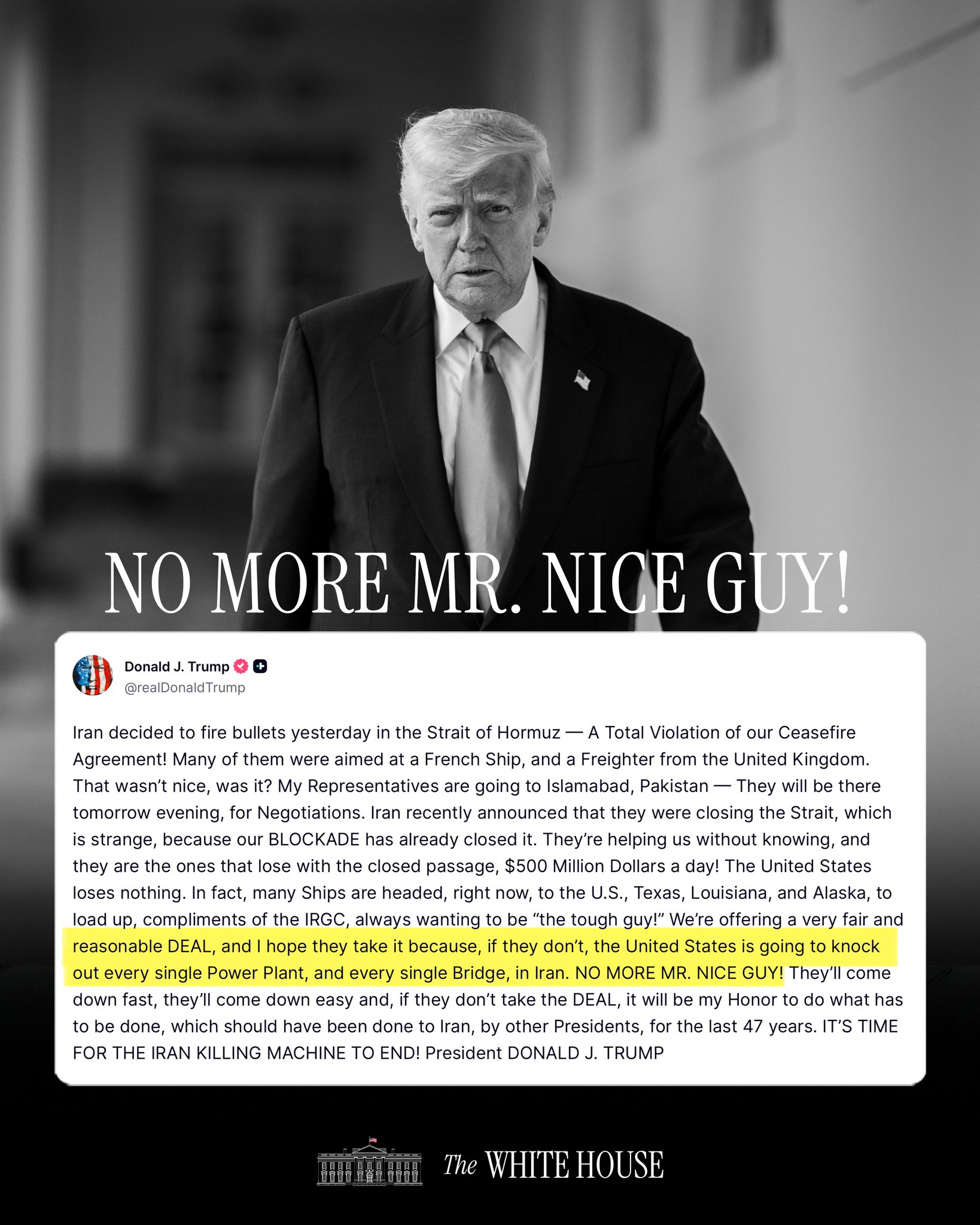
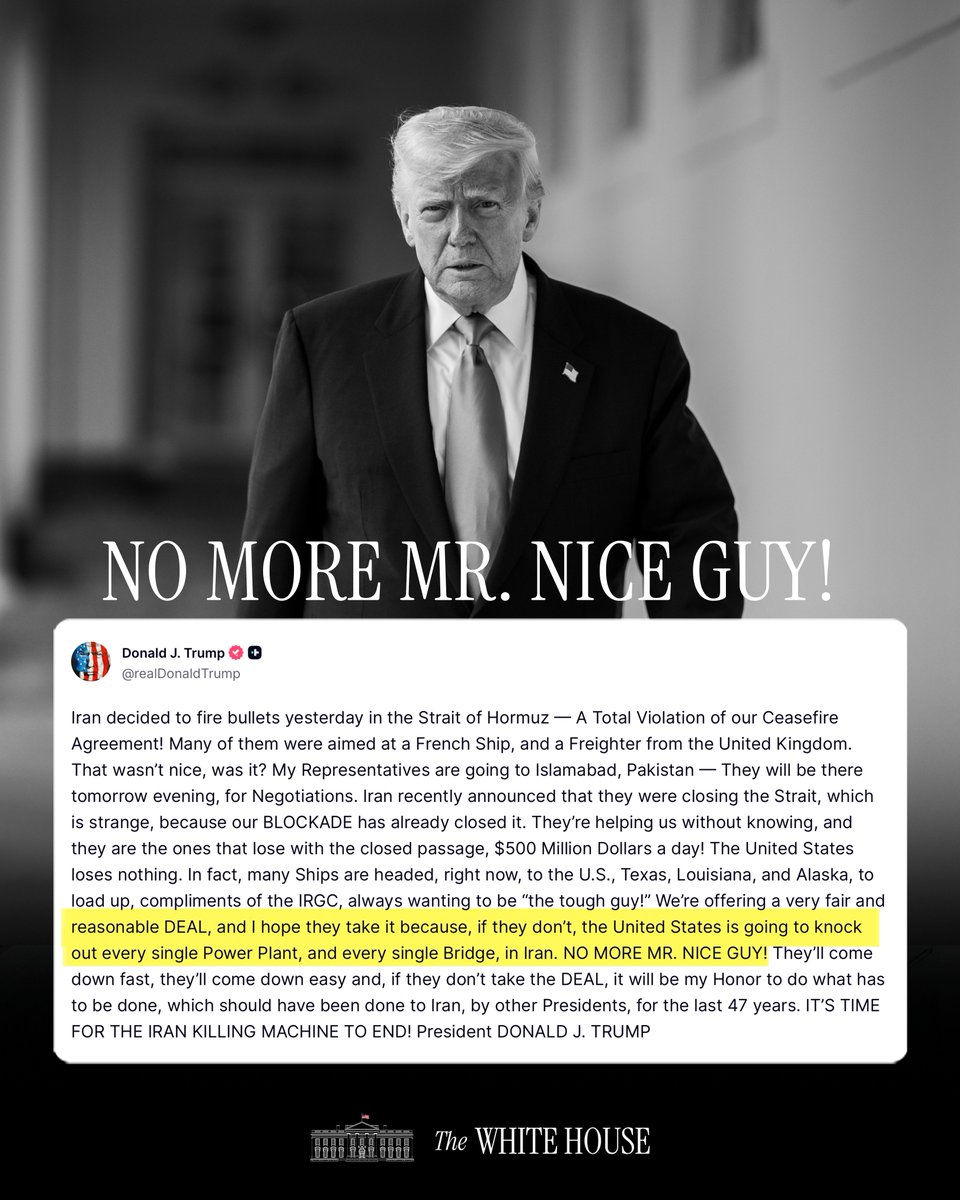
President Trump posted yesterday that if Iran doesn't take his offer, "the United States is going to knock out every single Power Plant, and every single Bridge, in Iran." Set the merits of the deal aside. Hitting power plants and bridges is war by any honest reading. The question is who gets to make that call — and the answer the Constitution gives is Congress, not one man.
1. Article I is not a suggestion. Section 8 vests the power to declare war in Congress on purpose. Federalist 69 contrasts the American presidency with the British monarch specifically on this point: the President commands the armed forces once war is authorized; he does not start it. The War Powers Resolution of 1973 tries to claw some of that back with a 60-day clock and notification rules, but the real bar should be Article I itself, not a statutory band-aid that Congress has let decay through forty years of looking the other way.
2. An authorization makes the threat more credible, not less. A threat from one president can be walked back by the next — or by the same one on a different day. A threat ratified by a recorded vote of Congress is the United States speaking with one voice. Tehran knows this. So does every capital watching how seriously Washington means what it says. If the White House wants Iran to take the offer, the fastest way is to show the coalition behind the stick is broad, bipartisan, and durable. An AUMF is leverage, not weakness — it hardens the ultimatum.
3. Unilateral wars eventually come home. Libya 2011 was launched without congressional authorization and ended with a failed state both parties wish they could disown. The Syria strikes in 2017 and 2018 were ordered the same way, and each round hollowed out the legislative branch a little more. Whoever sits in the Oval Office next inherits a bigger tool and the temptation to reach for it without asking. Americans who want checks on executive power kept alive should want this one reasserted now, while it still can be.
The call. Congress is in session. Members from both parties have voiced concern. The right move is a resolution on the floor this week — yes or no — before any kinetic action. A "yes" gives the President a stronger hand at the table. A "no" ends an adventure the country didn't sign up for. Either way, the Republic benefits when Article I is not a dead letter.
Source: @WhiteHouse on X
Loading comments...