Cops Invented a Traffic Violation to Fish for Drugs. Three Courts Have Now Said: No Qualified Immunity.
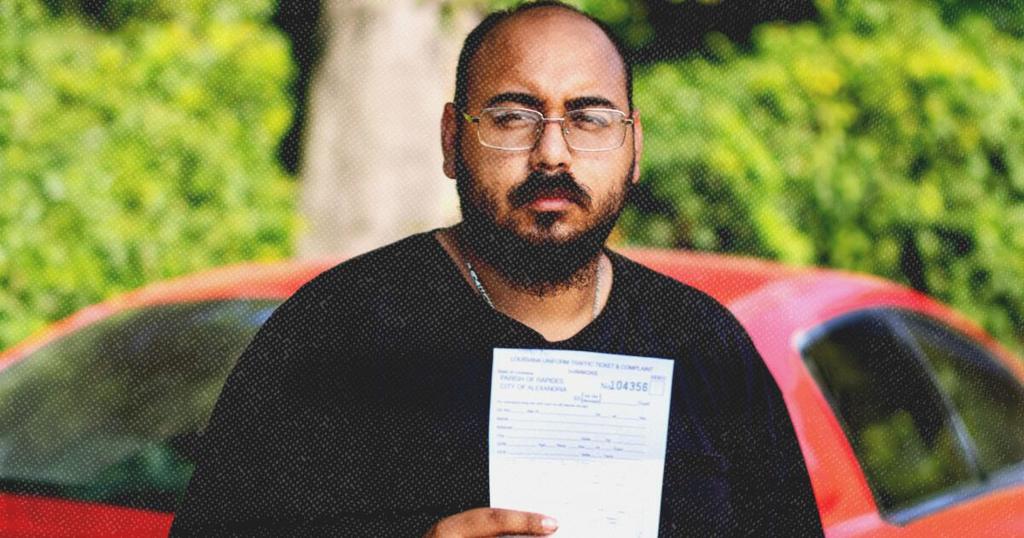
Mario Rosales and his girlfriend Gracie Lasyone were pulled over by two Alexandria, Louisiana, police officers, Samuel Terrell and Jim Lewis, on what their 2022 lawsuit calls a "fabricated traffic violation." The officers ordered them out of the car, held them on the roadside for 21 minutes, grilled them about drugs, frisked Rosales and had him empty his pockets. They found nothing. The computer checks came back clean. Every citation was eventually dismissed.
The officers then claimed qualified immunity, arguing it wasn't "clearly established" that any of this was unconstitutional.
The 5th Circuit unanimously disagreed. The panel held that Rosales and Lasyone plausibly alleged several Fourth Amendment violations: a stop with no real violation, a detention stretched far past its purpose, and searches with no reasonable suspicion. The court leaned on Terry v. Ohio (1968): police may detain you only on reasonable suspicion of crime, and frisk you only if they reasonably suspect you're armed and dangerous. That rule has been the law for more than half a century.
Key facts:
- This is the third ruling denying the officers immunity, after the magistrate judge and the district court.
- The case now moves into discovery against the officers and the city of Alexandria.
- Rosales and Lasyone are represented by the Institute for Justice.
- Reason's Jacob Sullum pairs it with the 8th Circuit's recent ruling that a Taney County, Missouri, judge gets no immunity for locking two kids in holding cells. As that court put it, when the law is that clear, the lack of a matching precedent doesn't save the official.
Why it's a win: Pretext stops are one of the most common ways ordinary drivers get turned into suspects. Qualified immunity usually lets officers walk away by pointing out that no earlier case had the exact same facts. Here, courts said the basic rule is enough: no suspicion, no detention, no search. That's a real limit on a doctrine that has shielded misconduct for decades.
Sources: Reason: "2 Recent Cases Illustrate the Limits of a Doctrine That Often Blocks Civil Rights Claims" · Institute for Justice press release · IJ case page
Image: Institute for Justice, via Reason.
Loading comments...